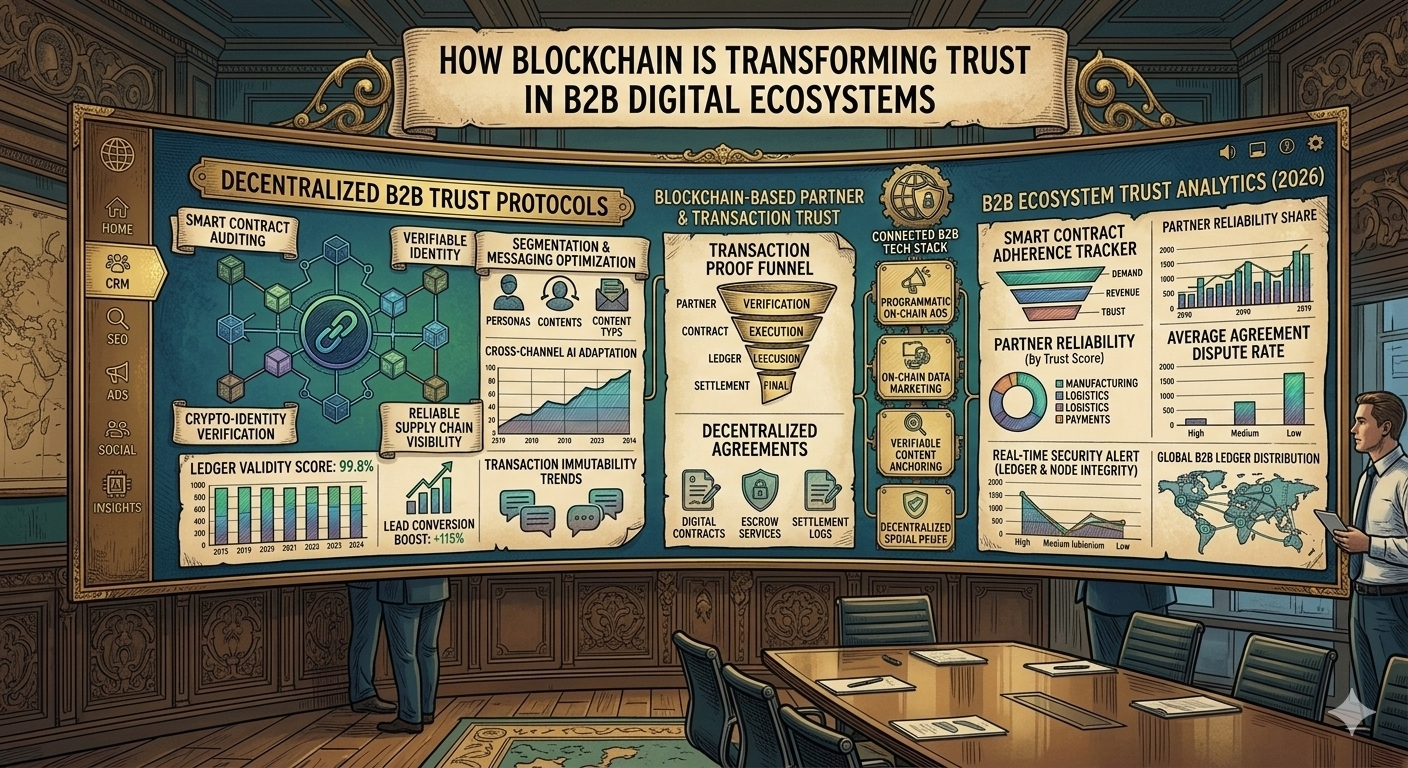
In an increasingly digital business environment, trust has become one of the most valuable assets for organizations. Companies exchange massive volumes of data, manage global supply chains, and collaborate with partners across multiple regions.
As these digital ecosystems grow more complex, ensuring transparency, security, and reliability becomes a major challenge.
This is where blockchain technology is gaining attention.
Originally associated with cryptocurrency, blockchain has evolved into a powerful technology capable of transforming how organizations store data and verify transactions.
For B2B companies navigating a rapidly evolving technological landscape, blockchain represents an important development that could reshape business interactions.
Understanding Blockchain Beyond Cryptocurrency
While blockchain first gained recognition through digital currencies, its underlying technology has far broader applications.
At its core, blockchain is a decentralized digital ledger that records transactions across a distributed network. Each record is securely linked to the previous one, making the system highly resistant to tampering or unauthorized modifications.
Because of this structure, blockchain offers a transparent and verifiable record of transactions.
For businesses that rely on complex networks of partners, suppliers, and clients, this transparency can significantly improve trust and accountability.
Improving Transparency Across Supply Chains
One of the most promising applications of blockchain is in supply chain management.
Global supply chains often involve multiple organizations operating across different regions. Tracking products and ensuring compliance can be difficult when information is fragmented.
Blockchain provides a shared ledger where all participants can access verified records of transactions and product movements.
This transparency reduces disputes and improves accountability.
Industries such as manufacturing and logistics are increasingly exploring blockchain-based systems to improve operational efficiency.
Enhancing Data Security and Integrity
Data security is another major concern for modern businesses.
Organizations must protect sensitive information while ensuring that authorized partners can access the data they need. Traditional centralized systems can sometimes create vulnerabilities if a single database becomes compromised.
Blockchain offers a different approach.
Because data is stored across multiple nodes within a distributed network, altering records without consensus becomes extremely difficult. This decentralized architecture strengthens data integrity and reduces the risk of unauthorized manipulation.
For industries that rely heavily on secure data exchanges—such as finance, healthcare, and technology—blockchain can provide layers of protection.
Enabling Smart Contracts and Automated Agreements
Another innovation associated with blockchain is the concept of smart contracts.
Smart contracts are self-executing digital agreements that automatically enforce predefined conditions when certain criteria are met.
For example, a payment could be released once a shipment is verified.
These automated processes reduce the need for manual oversight and minimize delays in complex business transactions.
In B2B environments where contracts often involve multiple parties, smart contracts can streamline operations and improve efficiency.
The Growing Enterprise Interest in Blockchain
As organizations recognize the potential benefits of blockchain, enterprise adoption is increasing.
Technology companies, financial institutions, and logistics providers are exploring ways to integrate blockchain into their digital infrastructures.
These initiatives aim to improve transparency, streamline operations, and strengthen trust across business ecosystems.
However, many decision-makers are still evaluating how blockchain fits into their broader digital transformation strategies.
This is why education around emerging technologies is becoming increasingly important.
Connecting Innovation with the Right Audience
For companies developing blockchain solutions, reaching the right professional audiences can be challenging.
Blockchain remains a complex technology, and many decision-makers rely on research and expert insights.
This makes content-driven marketing strategies particularly valuable.
Whitepapers, industry reports, and technical insights allow organizations to explain the benefits and potential applications of blockchain technology in ways that resonate with business leaders.
Platforms like iTMunch help companies distribute this valuable content to professionals actively exploring new technologies.
Through targeted content syndication and demand generation campaigns, organizations can connect their insights with decision-makers searching for reliable information.
The Future of Blockchain in B2B Innovation
As digital ecosystems continue to expand, technologies that improve transparency, trust, and security will become increasingly important.
Blockchain has the potential to support these goals by enabling secure collaboration across complex business networks.
While adoption may take time, many experts believe blockchain will play a significant role in the future of enterprise technology.
For organizations looking to lead in this evolving landscape, sharing knowledge will remain essential.
By combining innovation with effective content distribution strategies, companies can help shape the conversation around blockchain.