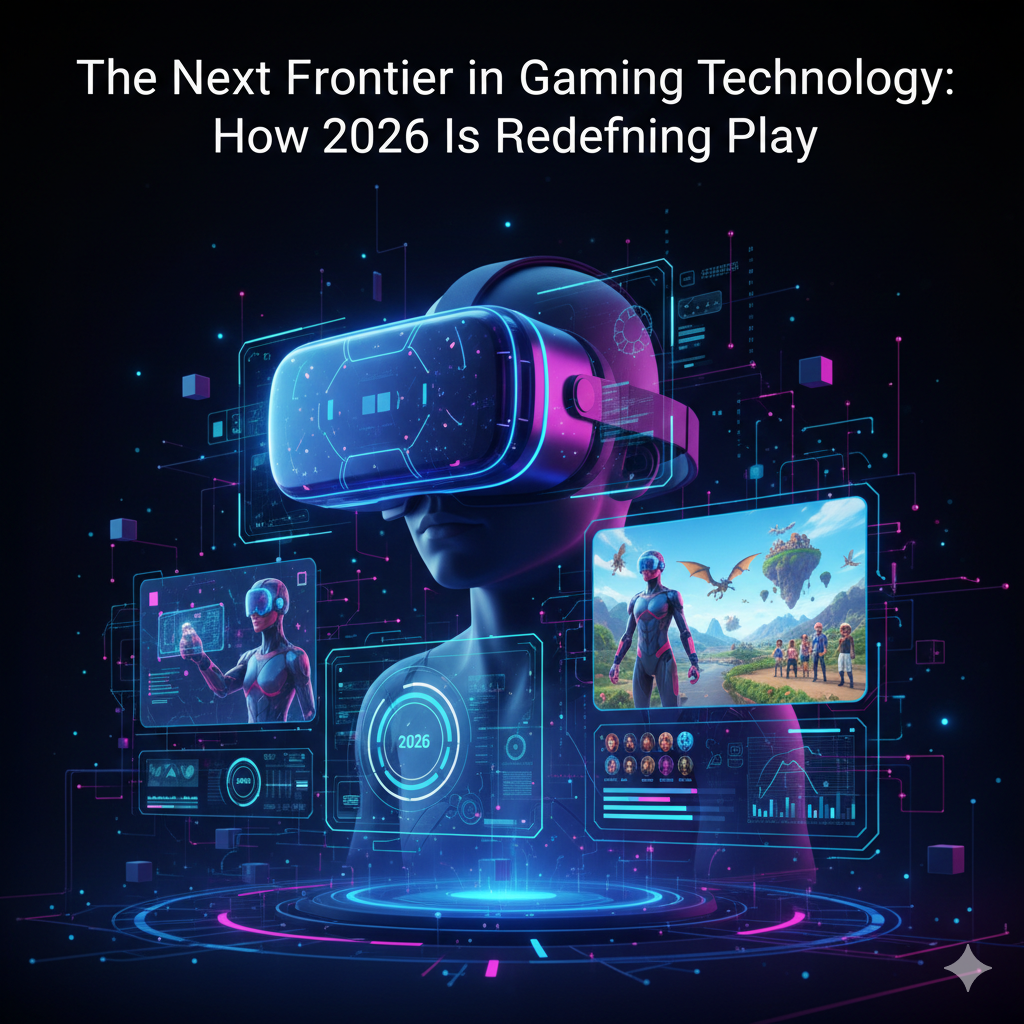
The Next Frontier in Gaming Technology: How 2026 Is Redefining Play
 Vansh Banthia,
8 months ago
4 min read
Vansh Banthia,
8 months ago
4 min read
Gaming technology has always evolved at a breakneck pace—from 8-bit consoles to immersive VR worlds. But in 2026, the industry is entering a transformative era, where AI, cloud computing, and next-gen hardware are reshaping how we play, interact, and even monetize games.
Gamers today expect more than graphics—they demand experiences that are adaptive, intelligent, and socially integrated. Developers and brands that fail to embrace this wave risk being left behind.
AI-Driven Gameplay: Smarter Worlds, Smarter Characters
Artificial Intelligence is no longer just for NPC behaviors—it’s becoming the backbone of dynamic game worlds.
- Adaptive difficulty: Games now adjust in real time based on player skill, choices, and even physiological feedback (heart rate, focus, etc.).
- Procedural storytelling: AI generates unique narratives tailored to each player, making replayability nearly infinite.
- Intelligent NPCs: Non-player characters now make strategic decisions that feel human, creating emergent gameplay that surprises even veteran players.
AI doesn’t just enhance the challenge—it personalizes the experience, making each session feel unique.
Cloud Gaming and Seamless Multi-Device Play
Latency and hardware limitations have long restricted gaming. Cloud technology is breaking these barriers:
- Play anywhere: High-end AAA titles can now run on low-spec devices via cloud streaming.
- Instant updates: Players access new content without large downloads or patches.
- Cross-platform continuity: Save progress across consoles, PCs, and mobile devices effortlessly.
This shift also reduces barriers to entry, allowing more players to experience high-quality gaming without expensive hardware.
Virtual Reality (VR) and Mixed Reality (MR) Innovations
VR and MR are moving from novelty to mainstream engagement. Key innovations in 2026 include:
- Lightweight, untethered headsets with high-resolution displays
- Haptic feedback suits that simulate touch, resistance, and impact
- Shared virtual environments for cooperative and social gameplay
Games are no longer just visual—they are full-body, immersive experiences where player actions directly influence the environment.
AI + Procedural Content Generation: Infinite Worlds
Developers are leveraging procedural generation combined with AI to produce endless game content without massive manual effort:
- Vast open worlds that adapt to player behavior
- Real-time generation of quests, maps, and items
- Personalized challenges and loot based on playstyle
This not only increases replayability but also reduces development costs, allowing indie studios to compete with AAA franchises.
Blockchain and Play-to-Earn Integration
Gaming in 2026 is increasingly linked to ownership, rewards, and economies:
- NFTs and digital collectibles: Players truly own in-game assets that can be traded or sold
- Play-to-earn mechanics: Gamers monetize their skills while engaging with the game
- Cross-game asset portability: Items and skins can move between different gaming ecosystems
Blockchain is transforming games from a hobby into a potential livelihood for skilled players, blurring the lines between entertainment and digital entrepreneurship.
5G and Ultra-Low Latency Gaming
The rollout of 5G networks has finally unlocked truly mobile multiplayer experiences:
- Real-time multiplayer without lag
- Seamless AR and MR integration in mobile environments
- Cloud gaming with console-level responsiveness
This ensures that fast-paced competitive titles can thrive on handheld devices without sacrificing performance.
Gaming AI as a Personal Coach
AI is also moving into player coaching:
- Real-time suggestions during gameplay
- Strategy optimization based on historical performance
- Personalized tutorials for new skills or game modes
This tech transforms casual gamers into skilled competitors, enhancing engagement and retention.
Social and Metaverse Integration
The next-gen gaming experience is social at its core:
- Integrated voice and gesture interactions
- Persistent social worlds and hubs
- Cross-title social identities and achievements
Games are no longer solitary experiences—they are dynamic social platforms that combine entertainment, networking, and even content creation.
What This Means for Game Developers and Brands
In 2026, gaming technology demands a multi-disciplinary approach:
- AI and procedural content to maximize engagement
- Cloud infrastructure for seamless play
- Blockchain for ownership and monetization
- Immersive hardware to enhance experiences
- Social and community features for retention
Brands that invest in these technologies can unlock new revenue streams, increase retention, and create unforgettable experiences.
Final Thoughts
The gaming landscape in 2026 is more than graphics—it’s intelligence, immersion, and adaptability. AI, cloud gaming, VR/MR, blockchain, and 5G are converging to create experiences that are highly personalized, socially connected, and economically significant.
Gamers today expect a world that responds to them, challenges them, and even rewards them in meaningful ways. Developers and brands that embrace these technologies aren’t just building games—they’re building the future of entertainment.