The “Signal Surge”: Why 2026 B2B Marketing is Replacing the Static Funnel with Real-Time Orchestration
 Vansh Banthia,
3 days ago
3 min read
Vansh Banthia,
3 days ago
3 min read
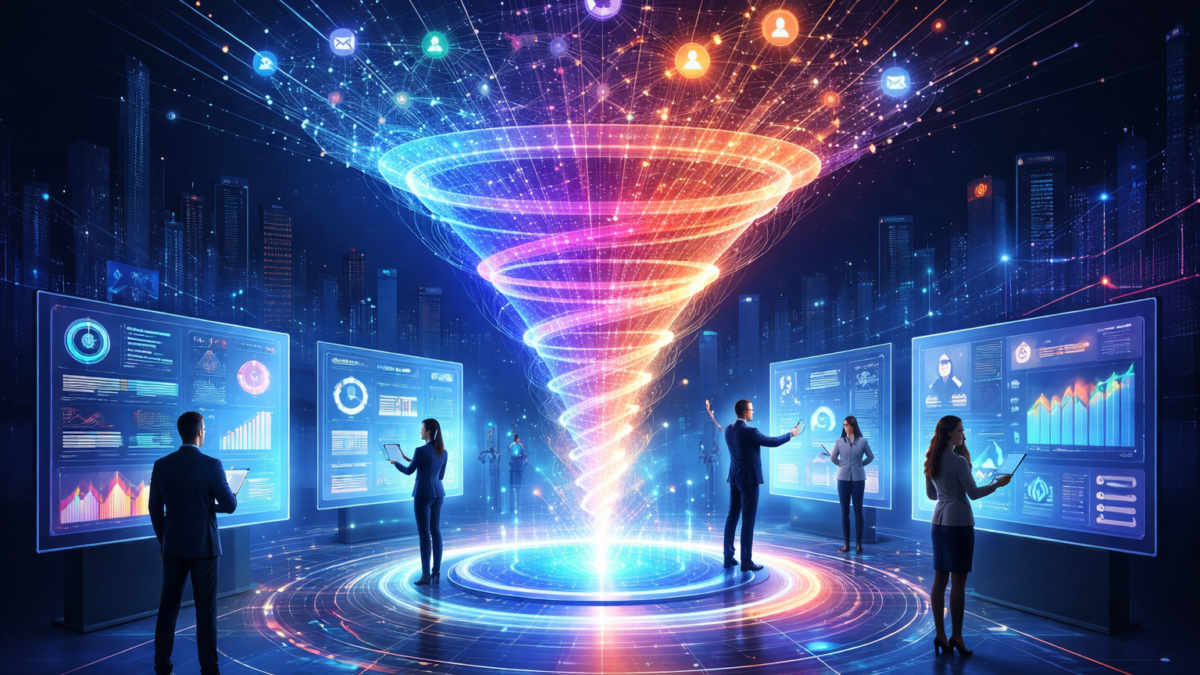
For decades, the B2B marketing funnel was a linear, predictable journey: Awareness, Consideration, Decision. We pushed leads through the pipe and hoped they didn’t leak. But as we move through 2026, the “funnel” has officially collapsed. It has been replaced by the Signal Surge.
In a world where 75% of B2B pipeline decisions are now influenced by AI and 90% of buying is intermediated by AI Agents, the traditional lead-scoring model is broken. Buyers don’t move in stages anymore; they move in bursts of high-intent signals. The most successful brands on ITMunch.com this year have stopped “managing a funnel” and started “orchestrating a signal.”
The Crisis: The “Lead-Based” Blind Spot
In 2024, we celebrated when an individual downloaded a white paper. We called them a “Lead.” In 2026, we know that a single person downloading a PDF is often just noise. B2B purchasing is a Buying Group sport, involving an average of 11–15 stakeholders.
If you are only tracking the individual, you are blind to the account. The “Signal Surge” approach looks for Intent Clusters—when a Lead Architect, a CFO, and a Security Director from the same company all engage with different pieces of your “Knowledge Graph” within the same 48-hour window. That is a signal. Everything else is just a click.
2026 Strategy: “From MQLs to Account-Based Experiences (ABX): Mapping the 2026 Buying Group Signal.”
3 Pillars of Signal-Driven Orchestration
To capture and convert the 2026 buyer, your IT marketing stack must master these three pillars:
1. Predictive “Surge” Detection
Static lead scores are out; Dynamic Signal Surge Scores are in.
- The Tech: Using AI-powered analytics (like the Improvado AI Agent) to query your data in plain English: “Which accounts in the SaaS vertical showed a 50% increase in technical documentation engagement this week?”
- The Action: Instead of a generic email, this “Surge” triggers an automated, personalized video demo sent directly to the account’s decision-makers.
2. The “Human-in-the-Loop” Multiplier
As AI-generated content saturates the web, Human-First Media has become the ultimate trust signal.
- The Strategy: Use AI to handle the “Generalist” work (SEO formatting, data cleaning), but use your Subject Matter Specialists to provide the “Pattern Recognition” that machines can’t mimic.
- The Action: Feature your actual engineers in “Raw, Unfiltered” behind-the-scenes content. In 2026, a “specialist” who has seen 1,000 implementations is 10x more valuable than a generic white paper.
3. Agentic Content Syndication
Since AI agents are now the “Gatekeepers” of research, your content must be Agent-Friendly.
- The Tech: Implementing Schema Markup and structured “Answer Blocks” so that when a buyer’s AI agent asks, “Compare the security protocols of Vendor A and Vendor B,” your data is the most ingestible and authoritative source.
- The Goal: Achieving a high “Share of LLM”—becoming the most cited brand in AI-generated research reports.
The Shift in Marketing Fundamentals
| Metric | The Funnel Era (2024) | The Signal Surge Era (2026) |
| Unit of Measure | Individual Leads (MQLs). | Account-Based Buying Groups. |
| Content Goal | Traffic & Downloads. | Revenue Impact & AI Citations. |
| Response Time | Follow up in 24 hours. | Real-time “Surge” Orchestration. |
| Key Resource | Generalist Content Teams. | Specialized Human Experts + AI Agents. |
The Bottom Line: Velocity is a Product of Signal
The B2B winners of 2026 aren’t the ones with the biggest budgets; they are the ones with the clearest Visibility. By moving away from “Set it and Forget it” marketing and toward a Signal Surge model, you reduce the friction between your brand and the buyer.
On a technical hub like ITMunch, the “Answer Economy” demands that you prove your expertise instantly. Stop trying to “nurture” a lead through a fake journey and start responding to the signals they are already sending. In 2026, the fastest way to revenue is to be the brand that listens the hardest.
The "Signal Surge": Why 2026 B2B Marketing is Replacing the Static Funnel with Real-Time Orchestration