Predictive Lead Scoring: How AI Is Redefining B2B Lead Qualification
 Vansh Banthia,
3 weeks ago
4 min read
Vansh Banthia,
3 weeks ago
4 min read
For B2B marketing teams, generating leads is only half the battle. The real challenge lies in identifying which prospects are most likely to convert into customers. Traditional lead scoring systems—often based on static rules and manual inputs—have long helped marketers prioritize leads. However, as customer journeys become more complex, these conventional methods are struggling to keep up.
This is where predictive lead scoring powered by artificial intelligence (AI) is transforming the landscape of B2B marketing.
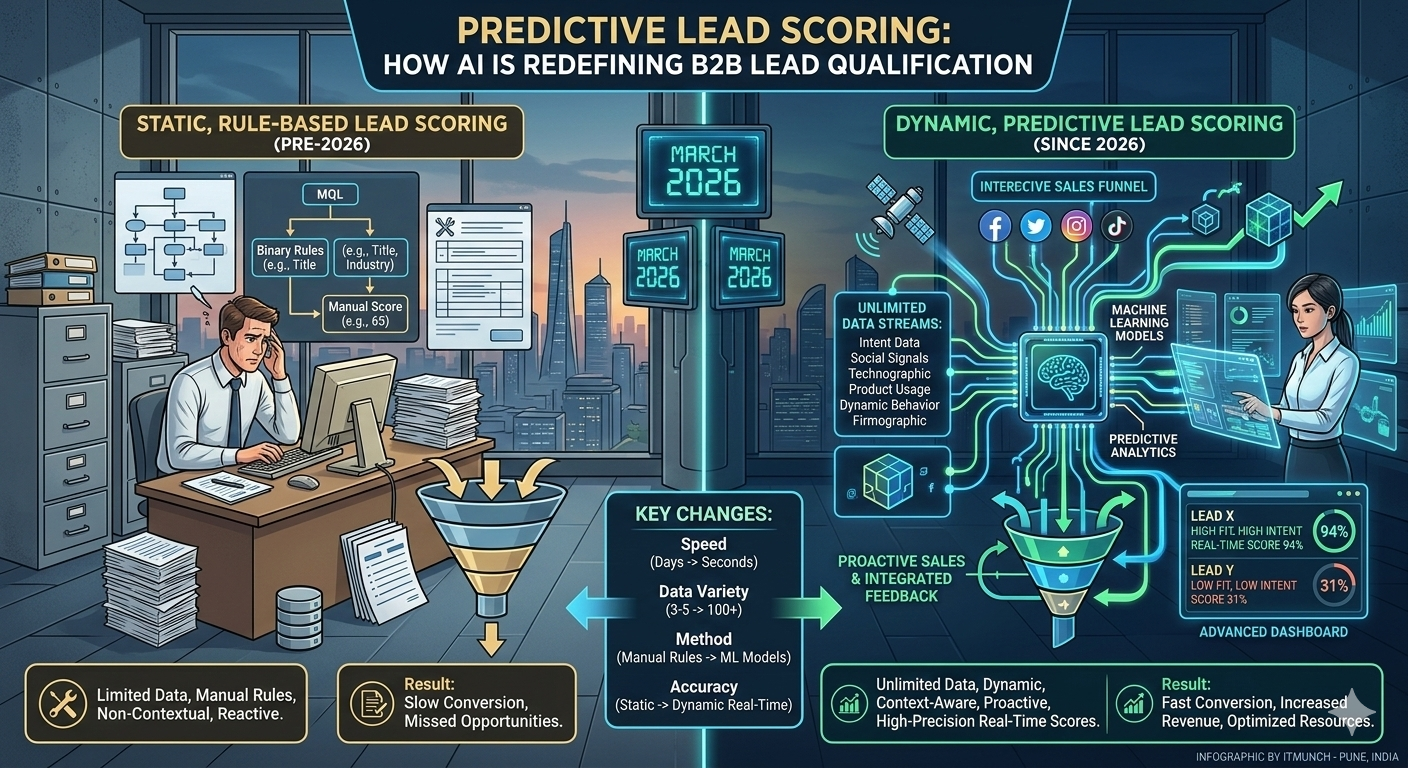
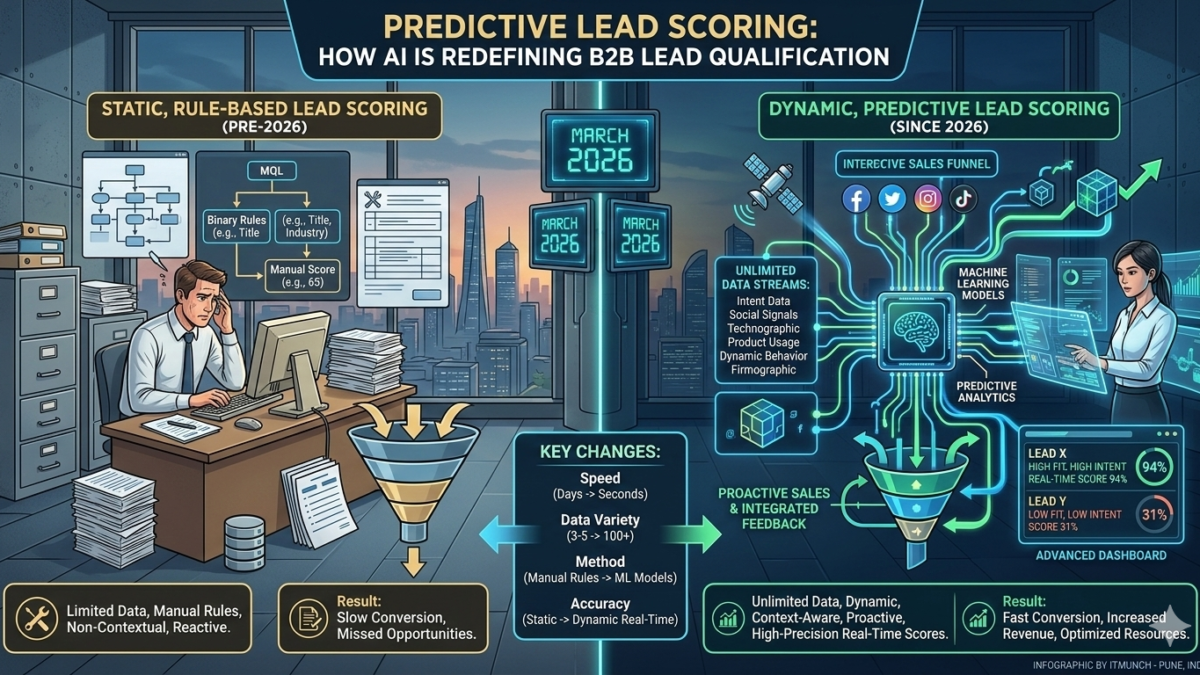
Predictive lead scoring uses machine learning algorithms to analyze large volumes of behavioral, demographic, and engagement data to determine which leads have the highest probability of converting. By identifying patterns that human analysis may miss, AI-driven lead scoring allows marketing and sales teams to focus their efforts on the most promising prospects.
As organizations increasingly adopt data-driven marketing strategies, predictive lead scoring is becoming a critical component of the modern martech stack.
The Limitations of Traditional Lead Scoring
Traditional lead scoring models typically rely on predefined rules created by marketing teams. These rules assign points to leads based on actions such as downloading content, visiting specific pages, or filling out forms.
While this approach can help prioritize leads, it has several limitations:
- Scoring rules are often subjective and based on assumptions rather than data-driven insights
- Static scoring models may not adapt to changing buyer behavior
- Manual rule creation can be time-consuming and difficult to maintain
- Important behavioral signals may be overlooked
As buyer journeys evolve and digital interactions increase, relying solely on manual scoring systems can lead to missed opportunities and inefficient resource allocation.
Predictive lead scoring addresses these challenges by introducing continuous learning and automated data analysis.
How Predictive Lead Scoring Works
Predictive lead scoring uses machine learning algorithms to analyze historical data from past customers and prospects. By examining patterns in successful conversions, AI systems can identify the characteristics and behaviors that indicate a high likelihood of purchase.
The AI model then evaluates incoming leads based on multiple factors, including:
- Website interactions and browsing behavior
- Content downloads and engagement patterns
- Email engagement metrics
- Demographic and firmographic information
- CRM and marketing automation data
Using these insights, the system assigns a predictive score that reflects the probability of a lead becoming a customer.
Unlike traditional rule-based models, predictive scoring systems continuously learn and refine their predictions as new data becomes available.
Benefits of AI-Powered Lead Scoring
Improved Sales and Marketing Alignment
Predictive lead scoring helps ensure that sales teams focus on leads with the highest potential value. This alignment improves collaboration between marketing and sales teams and increases overall efficiency.
Higher Conversion Rates
By prioritizing leads most likely to convert, organizations can improve conversion rates and maximize the return on their marketing investments.
Faster Lead Qualification
AI-powered systems can evaluate large volumes of leads instantly, reducing the time required for manual analysis and enabling faster responses to potential customers.
More Accurate Insights
Machine learning models analyze hundreds of variables simultaneously, providing deeper insights than traditional scoring systems.
Use Cases in B2B Marketing
Predictive lead scoring can support several key marketing and sales activities.
Demand Generation Campaigns
Marketing teams can prioritize leads generated through campaigns and focus nurturing efforts on prospects with the highest likelihood of conversion.
Account-Based Marketing (ABM)
Predictive models can help identify high-value accounts that show strong ABM engagement signals, allowing teams to focus resources strategically.
Marketing Automation Optimization
Predictive scoring can trigger automated workflows based on lead intent, ensuring prospects receive the right content at the right time.
Sales Pipeline Acceleration
By directing sales teams toward the most qualified prospects, predictive scoring helps accelerate the movement of leads through the sales funnel.
Integrating Predictive Lead Scoring into the Martech Stack
Many modern marketing automation platforms and customer relationship management (CRM) systems are beginning to incorporate AI-powered predictive scoring capabilities.
For organizations looking to implement predictive lead scoring, key steps typically include:
- Consolidating customer data across marketing platforms
- Identifying relevant behavioral and demographic signals
- Integrating AI-driven analytics tools
- Continuously monitoring and refining scoring models
A well-integrated predictive scoring system enables marketing teams to make smarter decisions and deliver more personalized engagement strategies.
The Future of AI in Lead Qualification
As artificial intelligence continues to advance, predictive lead scoring is expected to become even more sophisticated. Future systems may incorporate real-time intent signals, advanced behavioral analytics, and cross-channel data integration.
These capabilities will allow organizations to identify buying intent earlier in the customer journey and respond with highly targeted engagement strategies.
In an increasingly competitive B2B landscape, the ability to identify and prioritize high-value prospects quickly will be a significant advantage.
Conclusion
Predictive lead scoring represents a major evolution in how organizations approach B2B lead qualification. By combining machine learning, advanced analytics, and marketing automation data, AI-driven systems provide a more accurate and scalable way to identify high-potential leads.
For marketing teams seeking to improve campaign performance and sales efficiency, adopting predictive lead scoring can unlock valuable insights and drive stronger business outcomes.
As AI becomes more deeply integrated into marketing technology platforms, predictive lead scoring will likely become a standard capability in the modern MarTech ecosystem.