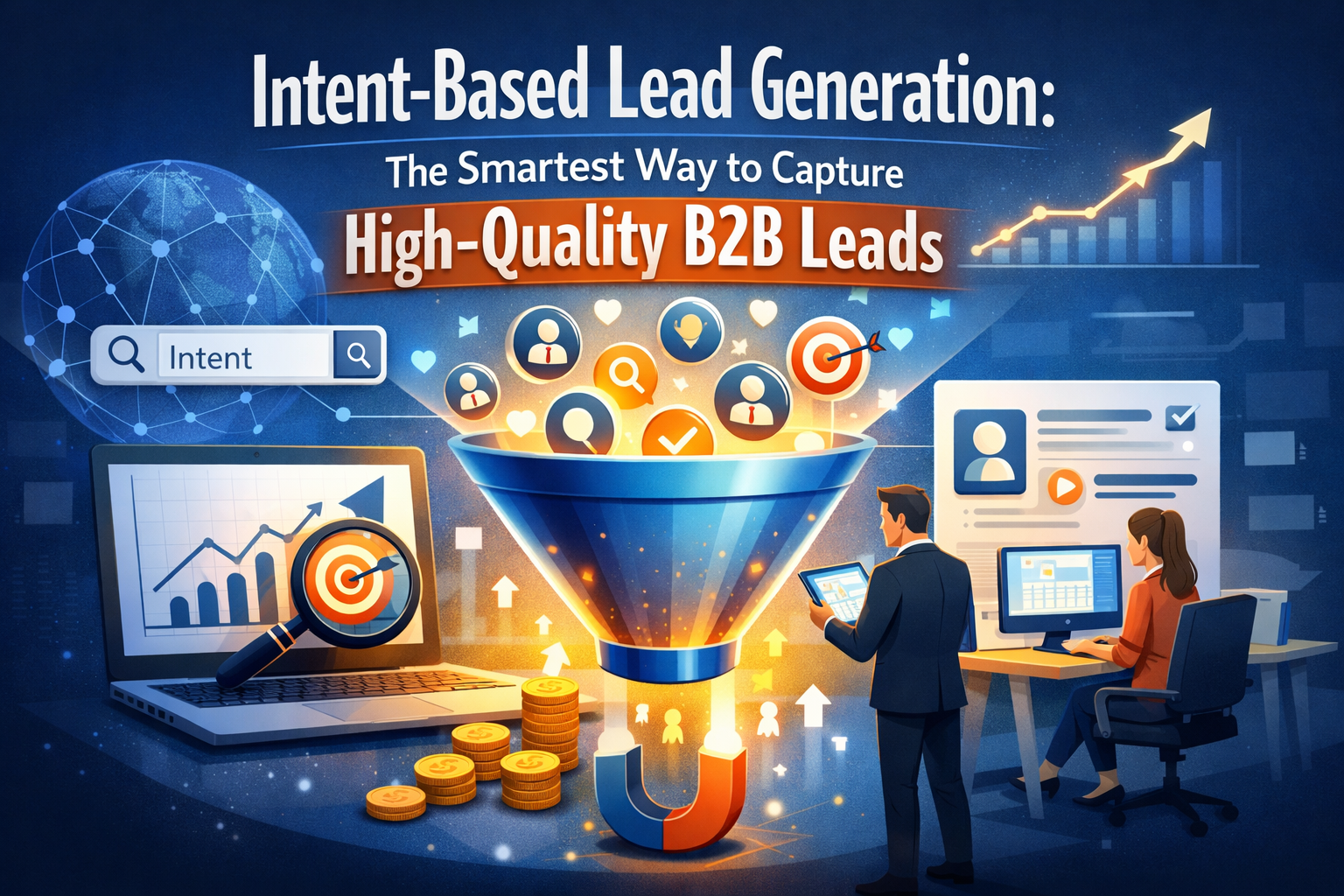
Intent-Based Lead Generation: The Smartest Way to Capture High-Quality B2B Leads
 Vansh Banthia,
4 weeks ago
4 min read
Vansh Banthia,
4 weeks ago
4 min read
For years, B2B marketers have focused on generating as many leads as possible through campaigns, paid ads, webinars, and content marketing. However, the biggest challenge many companies face today is not the quantity of leads but the quality of leads entering the pipeline.
Marketing teams often deliver thousands of contacts to sales teams, but only a small percentage of those prospects are actually ready to buy. This gap between lead volume and lead quality has pushed marketers to rethink traditional approaches.
One of the most effective solutions gaining traction is intent-based lead generation — a strategy that focuses on identifying prospects who are actively researching solutions and are more likely to convert.
By leveraging data signals, buyer behavior insights, and targeted content distribution, companies can attract high-intent prospects instead of cold leads.
What is Intent-Based Lead Generation?
Intent-based lead generation focuses on identifying businesses that are actively showing interest in specific products, services, or industry solutions.
Instead of marketing to a broad audience, this strategy targets prospects who are already demonstrating buying signals such as:
- Searching for industry-related keywords
- Downloading research reports
- Reading solution comparison articles
- Visiting competitor websites
- Engaging with relevant industry content
These signals help marketers identify organizations that are already in the consideration stage of the buyer journey.
This approach allows companies to prioritize prospects who are more likely to convert into qualified opportunities.
Why Traditional Lead Generation is Losing Efficiency
Many traditional lead generation strategies rely heavily on volume-based marketing tactics.
Common examples include:
- Generic email campaigns
- Mass advertising campaigns
- Broad webinar promotions
- Untargeted content downloads
While these tactics can generate large contact lists, they often result in low engagement and poor conversion rates.
Modern B2B buyers conduct extensive research before interacting with vendors. By the time they fill out a form or request a demo, they may already be 60–70% through their decision-making process.
This means companies need to identify potential buyers much earlier in their research phase.
Key Benefits of Intent-Based Lead Generation
Higher Conversion Rates
Since intent-based strategies target prospects already researching solutions, they are naturally more likely to convert compared to cold leads.
Sales teams spend less time nurturing uninterested prospects and more time closing deals.
Better Alignment Between Sales and Marketing
Intent data allows marketing teams to pass more qualified leads to sales teams. This improves collaboration and reduces friction between departments.
Sales representatives can focus their outreach on companies that are already showing buying signals.
Improved Marketing ROI
By focusing resources on high-intent prospects, companies can optimize their marketing spend. Campaigns become more efficient because they target organizations already exploring relevant solutions.
Key Intent Signals Marketers Should Track
Successful intent-based lead generation relies on identifying meaningful signals that indicate buyer interest.
Some of the most valuable intent indicators include:
Content Engagement
Prospects downloading whitepapers, research reports, or industry guides often indicate active research behavior.
Website Behavior
Visitors exploring product pages, pricing information, or case studies demonstrate deeper interest in a solution.
Industry Research Activity
Companies consuming large amounts of content around a specific topic may be evaluating potential vendors.
Competitor Research
If a prospect is frequently researching competitors, it indicates they may be in the vendor comparison stage.
Strategies to Implement Intent-Based Lead Generation
Invest in High-Value Content
Educational resources such as industry reports, solution guides, and case studies attract professionals actively researching solutions.
These assets help identify prospects demonstrating real buying intent.
Use Content Syndication Platforms
Content syndication allows companies to distribute assets across industry platforms and reach professionals who are actively searching for insights.
This approach helps capture leads already engaged in relevant research.
Align Marketing Automation with Intent Data
Marketing automation platforms can track behavioral signals such as repeated website visits, content downloads, and engagement patterns.
This data helps prioritize leads based on their likelihood to convert.
Personalize Outreach Campaigns
Once intent signals are identified, personalized marketing messages can significantly improve engagement.
For example, if a prospect downloads a guide about cloud security, follow-up communication can focus on related solutions and case studies.
The Future of B2B Lead Generation
As B2B buying journeys become increasingly digital, intent data will play a larger role in marketing strategies.
Companies that rely purely on traditional lead generation tactics risk spending significant budgets on low-quality leads. In contrast, organizations that adopt intent-based strategies can identify and engage buyers earlier in the research process.
The future of lead generation is not about capturing the most contacts—it is about identifying the right prospects at the right moment.
By combining intent signals, targeted content distribution, and personalized engagement strategies, B2B marketers can build stronger pipelines and deliver leads that truly matter.