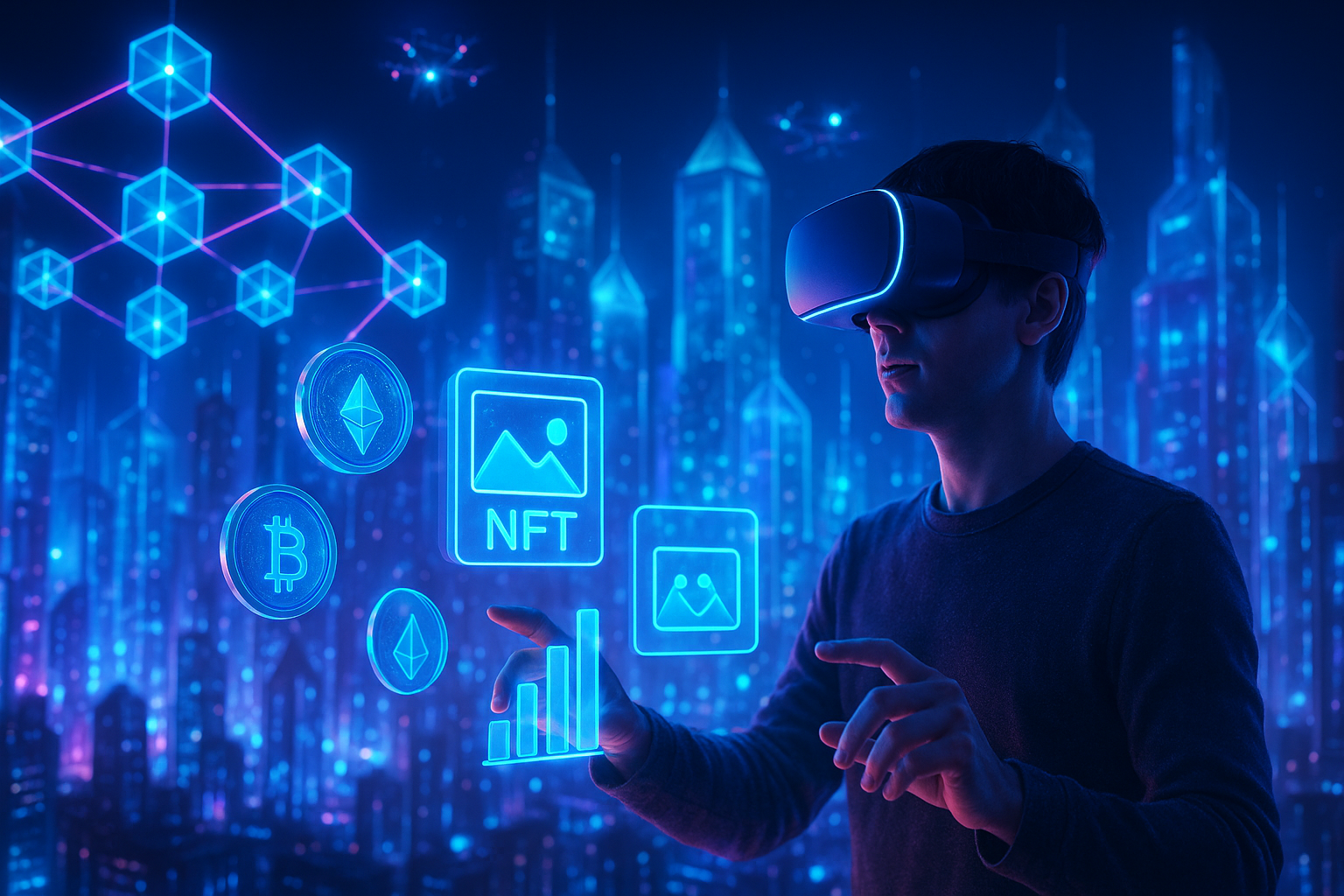
Metaverse and Blockchain: How Decentralization Is Shaping Virtual Worlds
 Gaurav Uttamchandani,
10 months ago
4 min read
Gaurav Uttamchandani,
10 months ago
4 min read
Table of Contents
Introduction
The metaverse is no longer just a concept for sci-fi movies—it’s a rapidly emerging virtual universe poised to reshape how we live, work, shop, and play. With companies like Meta, Epic Games, and Microsoft investing heavily in immersive digital spaces, the metaverse is becoming the future of the internet. But what fuels its decentralized, trustless foundation? The answer is blockchain technology.
As a backbone for digital trust, blockchain enables real ownership, transparency, and interoperability—key components for building and sustaining metaverse platforms. From secure virtual economies to NFT-driven identities, the fusion of blockchain and the metaverse is opening up unprecedented possibilities.
What Is the Metaverse?
The metaverse refers to a shared, immersive virtual world where users interact as 3D avatars, participate in events, own virtual property, and engage in digital commerce. These environments are persistent, real-time, and user-centric.
Examples of early metaverse platforms include:
- Decentraland
- The Sandbox
- Meta Horizon Worlds
- Roblox and Fortnite Creative
While these spaces vary in design and purpose, the common thread is interactivity, user-generated content, and an evolving digital economy.
Blockchain: The Engine Behind Virtual Ownership
Blockchain is a decentralized, immutable ledger that records transactions across a peer-to-peer network. In the metaverse, it plays a crucial role in:
- Enabling decentralized digital ownership
- Powering non-fungible tokens (NFTs)
- Securing smart contracts
- Supporting decentralized finance (DeFi)
- Ensuring interoperability across virtual platforms
Without blockchain, the metaverse would likely mimic traditional, centralized systems—where corporations own your data and assets can be taken away or altered at will.
Key Use Cases: How Blockchain Enhances the Metaverse
NFT-Based Ownership
NFTs are unique digital tokens stored on a blockchain. In the metaverse, NFTs represent:
- Virtual land
- Clothing and avatar accessories
- Art and collectibles
- Event tickets and more
NFTs grant users true ownership, allowing them to trade or monetize these assets across various ecosystems. For example, users in The Sandbox can purchase land NFTs and develop branded experiences or games.
Secure, Decentralized Economies
With cryptocurrencies like MANA (Decentraland), SAND (The Sandbox), and AXS (Axie Infinity), users can:
- Earn rewards for gameplay and contributions
- Buy and sell assets securely
- Participate in play-to-earn and create-to-earn economies
These transactions are borderless, transparent, and not controlled by any single entity.
Digital Identity and Self-Sovereign Data
Blockchain enables secure, decentralized identities that protect personal information. A self-sovereign identity system:
- Gives users full control over their credentials
- Enables seamless logins across platforms
- Reduces reliance on traditional passwords and data centers
In the metaverse, this empowers users to own their online persona instead of being locked into one provider’s ecosystem.
Smart Contracts for Automation
Smart contracts are self-executing pieces of code on the blockchain. In the metaverse, they enable:
- Automated real estate rentals
- In-game governance through DAOs
- Instant payments for digital services or royalties
They help build trustless systems where transactions occur automatically when preset conditions are met—no middleman needed.
Real-World Industries Being Transformed
The blockchain-metaverse convergence is already making waves across several sectors:
- Gaming: Gamers now truly own their in-game assets and can profit from their skills through blockchain-integrated games. The play-to-earn model is revolutionizing how developers and players engage economically.
- Real Estate: Digital land parcels are being bought and sold on platforms like Decentraland and Somnium Space. Major companies are establishing virtual HQs, stores, and event spaces in the metaverse.
- Art & Entertainment: Artists mint NFTs of their work and exhibit them in metaverse galleries. Musicians host live virtual concerts, selling exclusive access via blockchain tokens.
- Fashion & E-commerce: Luxury brands like Gucci and Balenciaga are experimenting with digital fashion, creating NFT wearables for avatars, merging real-world branding with virtual identity.
What’s Next? Challenges & Future Potential
Despite the excitement, there are still hurdles to overcome:
- Scalability issues on current blockchain networks
- Energy consumption, though improving with proof-of-stake models
- User onboarding complexity for non-crypto natives
- Regulatory uncertainty in some markets
Yet, the momentum is undeniable. The development of interoperable standards, zero-knowledge proofs, and layer-2 solutions promises to make blockchain integration faster, greener, and more accessible.
Conclusion: A Decentralized Digital Renaissance
The metaverse is more than a trend—it’s the foundation of Web3, the next-generation internet. And blockchain is the infrastructure that will make it fair, secure, and user-owned.
Whether you’re a creator, gamer, brand, or investor, the future of digital engagement lies at the intersection of these two powerful technologies. Together, blockchain and the metaverse are laying the groundwork for a world where digital presence equals real opportunity.
Call-to-Action
Want to learn how blockchain and the metaverse can shape your industry?
Explore more insights on futuristic tech, digital identity, and decentralized innovation at iTMunch.com.
Read next: Top 5 Web3 Trends of 2025
You May Also Like: What Is Generative Engine Optimization?