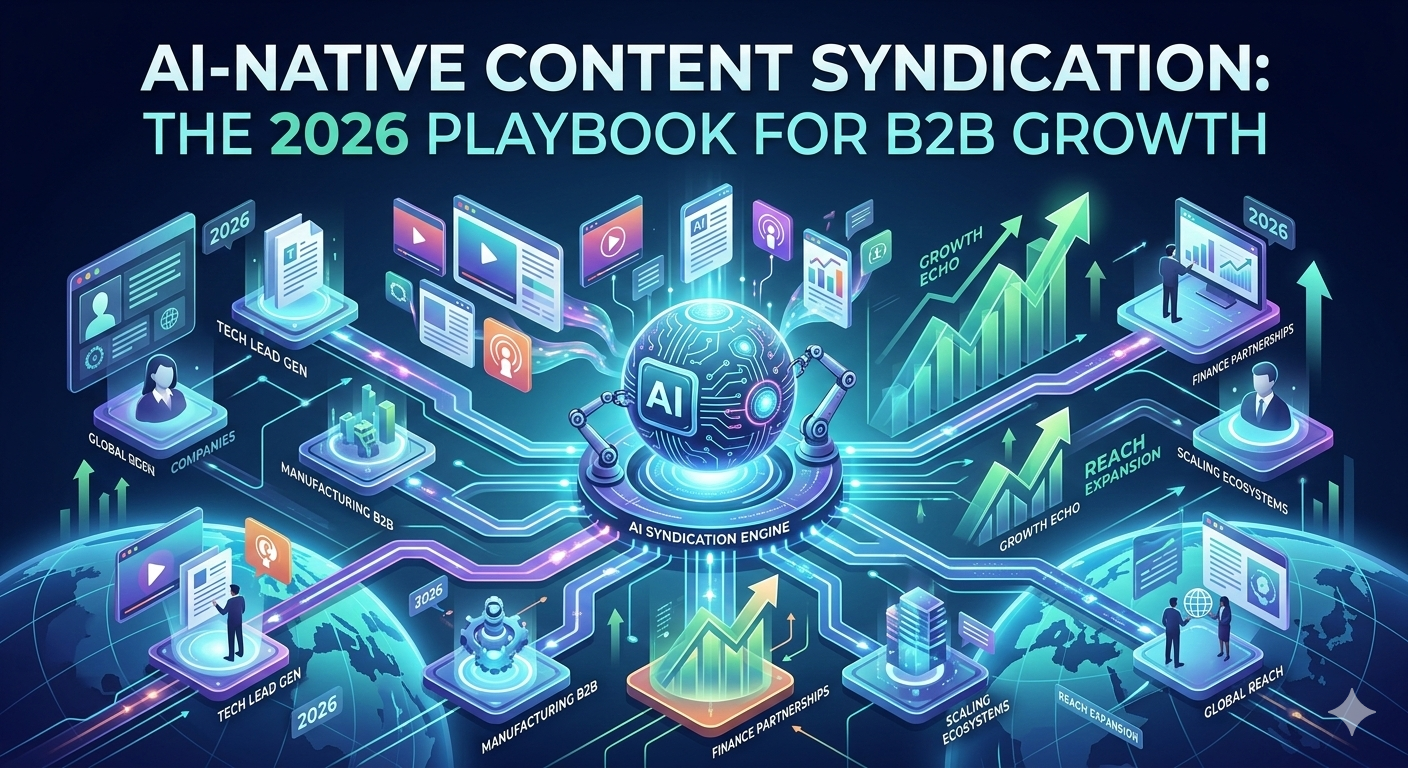
AI-Native Content Syndication: The 2026 Playbook for B2B Growth
 Vansh Banthia,
3 weeks ago
4 min read
Vansh Banthia,
3 weeks ago
4 min read
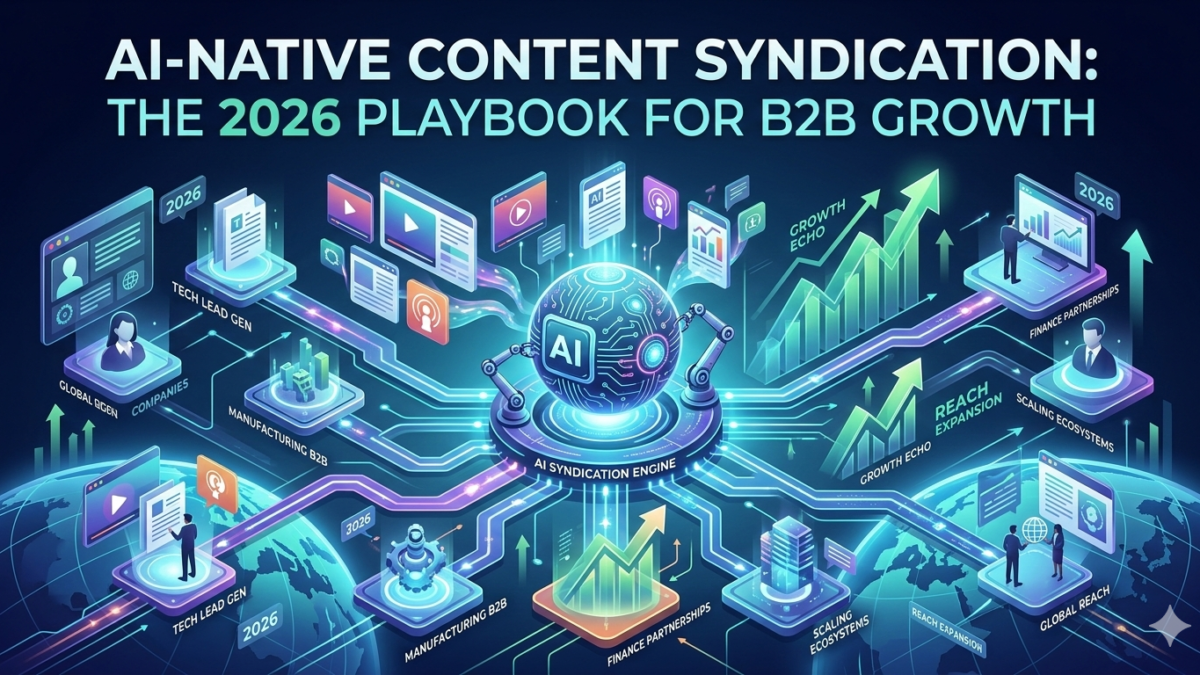
B2B marketers are facing a structural shift. Buying committees are expanding, third-party cookies are fading, and attention is fragmented across dozens of channels. In this environment, traditional demand generation tactics are losing efficiency. Content syndication, once treated as a volume-based lead play, is now being rebuilt as a precision revenue engine—powered by AI and intent data.
Content Syndication is becoming essential for modern marketing strategies.
For B2B teams looking to scale pipeline without sacrificing quality, the opportunity lies not in doing more campaigns, but in executing smarter ones.
Why Traditional Syndication No Longer Works
To succeed in this landscape, embracing Content Syndication is key.
Content Syndication helps businesses understand their audience better.
Integrating Content Syndication into campaigns can boost effectiveness.
For years, content syndication followed a predictable formula: publish a whitepaper, distribute it through a third-party network, and receive a batch of leads. The problem? Downloads were often confused with buying intent.
With Content Syndication, engagement can be significantly improved.
Modern buyers consume multiple pieces of content before ever speaking to sales. Most are researching, comparing, or educating themselves. When marketing teams treat every form fill as a high-intent signal, sales productivity drops and trust erodes.
The challenge is no longer generating leads—it’s identifying the right ones.
The Rise of AI-Driven Targeting
AI has fundamentally changed how syndication campaigns are built and optimized.
Various stakeholders benefit from tailored Content Syndication approaches.
Moving Beyond Static Demographics
This enhances the value of Content Syndication in driving leads.
Instead of targeting broad categories like “VP of Marketing at SaaS companies,” AI analyzes behavioral signals across digital ecosystems. It identifies accounts actively researching relevant topics, signaling in-market intent rather than passive interest.
Content Syndication is vital for maintaining lead quality.
This intent-based targeting improves both engagement rates and downstream conversion metrics.
Matching Content to Buyer Stage
Not every stakeholder wants the same asset. Technical evaluators prefer in-depth whitepapers. Executives may engage more with strategic eBooks or case studies. AI-driven systems can dynamically align content formats to consumption patterns—maximizing relevance at scale.
Implementing Content Syndication strategies can streamline marketing efforts.
This shift transforms syndication from broadcast marketing into contextual engagement.
Solving the Lead Quality Crisis
A major pain point in B2B marketing is lead decay. Many syndicated leads go cold within days because they lack intent context.
Behavioral Layering
AI-powered models evaluate more than job titles and company size. They assess engagement signals such as time spent on content, frequency of topic research, and interaction patterns across channels.
This layered scoring approach allows teams to prioritize high-propensity accounts and design nurture flows aligned to actual interest.
Structured Nurture Over Immediate Sales Pressure
Evaluate your channels to maximize Content Syndication effectiveness.
High-performing syndication programs avoid aggressive follow-ups. Instead, they use structured nurture sequences:
- Immediate value delivery
- Insight-driven follow-up
- Contextual case studies
- Timely, soft conversion points
This approach builds credibility while gradually qualifying demand.
Choosing the Right Channels
Not all syndication platforms deliver equal value. The key is alignment between content type, audience, and intent data availability.
- Enterprise-focused networks are ideal for IT-heavy buying committees.
- ABM-driven platforms support account penetration strategies.
- Self-serve networks allow cost-efficient testing and optimization.
- Native discovery platforms amplify top-of-funnel reach.
The right mix depends on your ICP maturity and pipeline objectives.
Focus on metrics that include Content Syndication performance.
Measuring What Actually Matters
One of the most common mistakes in syndication is over-indexing on vanity metrics.
Impressions and click-through rates provide surface-level insights. What matters is pipeline influence and revenue attribution.
Effective measurement frameworks evaluate:
- Cost per qualified lead
- MQL-to-SQL conversion rates
- Opportunity creation velocity
- Revenue influenced per campaign
When paired with AI-driven performance optimization, this data enables real-time budget reallocation to high-performing channels.
The Future of Syndication Is AI-Native
Looking ahead, syndication platforms are evolving into intelligent engagement engines. Conversational AI will qualify leads before form submissions. Interactive video will replace static PDFs. Intent integration will become mandatory, not optional.
As privacy regulations tighten, first-party data collected through syndication will become one of marketing’s most valuable assets.
The future of marketing will heavily involve Content Syndication.
Organizations that adopt AI-native syndication strategies today will build scalable, predictable demand engines. Those that rely on outdated volume tactics risk bloated CRMs and underperforming sales teams.
Final Takeaway
Content syndication in 2026 is no longer about casting a wide net. It is about precision targeting, intelligent qualification, and structured execution.
When powered by AI and aligned with intent data, syndication becomes more than a lead source—it becomes a revenue accelerator.
At ITMunch, we continue to explore how technology reshapes B2B growth strategies. Stay ahead of the curve with insights on AI, demand generation, and digital marketing transformation.
If you’re ready to rethink how your syndication strategy drives pipeline, the time to evolve is now.