The Inbox Has Changed More in Two Years Than the Last Twenty: How Email Marketing Services Are Keeping Brands Relevant
 Purva Wankhade,
2 months ago
4 min read
Purva Wankhade,
2 months ago
4 min read
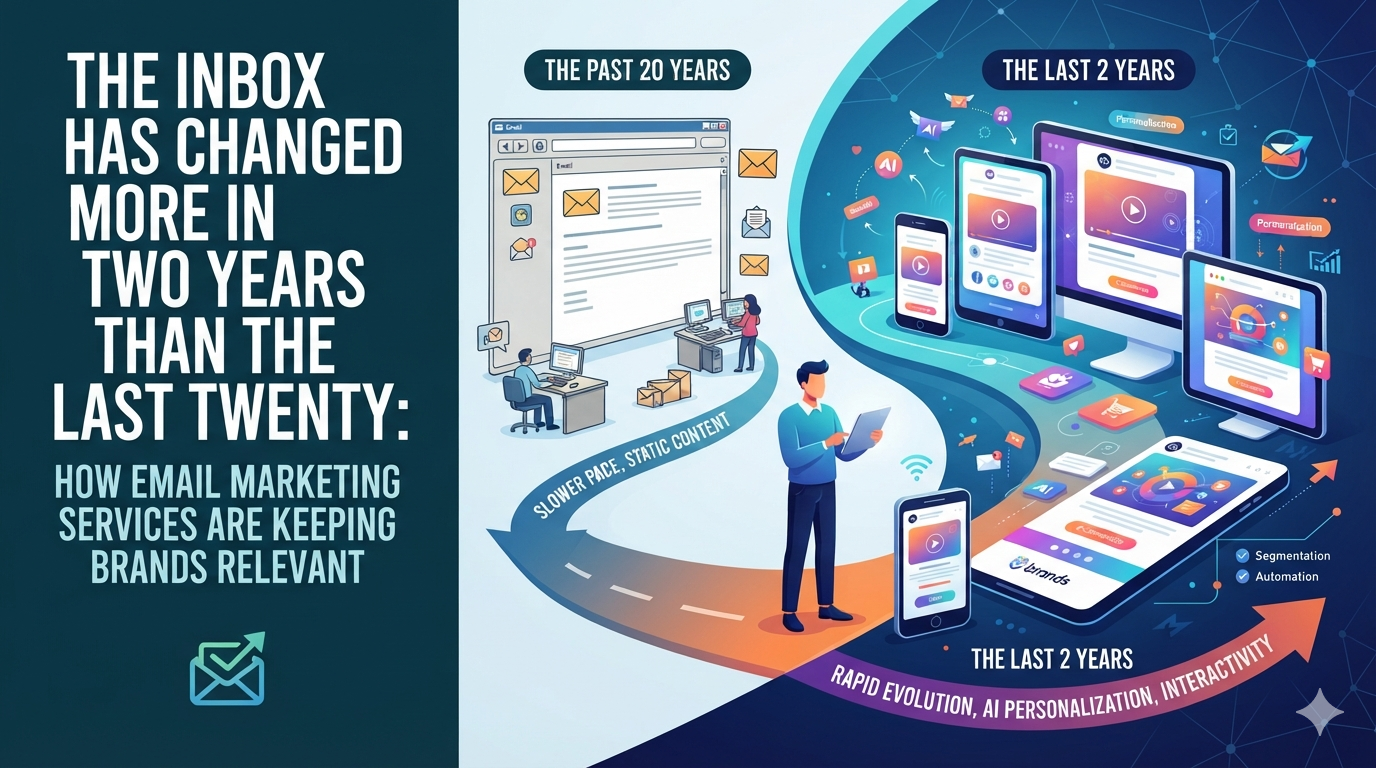
The way people interact with email has changed dramatically over the past two years. Artificial intelligence now filters inboxes, privacy updates limit traditional tracking, and users expect every message to feel timely and relevant. Businesses that still rely on outdated campaigns are finding it harder to capture attention, while those investing in modern email marketing services are building stronger customer relationships and generating measurable results. Email is no longer just a communication channel—it has become an intelligent engagement platform that rewards personalization, automation, and value-driven content.
How Email Marketing Services Are Redefining the Modern Inbox
Consumers receive hundreds of emails every week, yet only a handful earn their attention. Generic promotions and mass newsletters are quickly ignored because inbox providers prioritize relevance over volume. Modern email marketing services use behavioral data, audience segmentation, and AI-powered automation to deliver messages that match customer interests. Instead of sending one campaign to thousands of subscribers, businesses can deliver highly personalized experiences that increase open rates, click-through rates, and conversions. This shift has transformed email from a marketing tactic into a strategic business asset that nurtures long-term customer loyalty.
Artificial intelligence is also changing how marketers create campaigns. Subject lines can be optimized before sending, content recommendations are generated automatically, and predictive analytics identify the best time to reach each subscriber. These innovations enable email marketing services to produce smarter campaigns with less manual effort while continuously improving performance through data-driven insights. Rather than guessing what audiences want, businesses can rely on technology to understand customer behavior and adapt campaigns accordingly.
Privacy regulations have further accelerated this transformation. Tracking limitations introduced by major technology companies mean marketers can no longer depend solely on open rates to measure success. Instead, successful email marketing services focus on meaningful engagement metrics such as website visits, purchases, replies, and customer retention. Businesses that embrace first-party data and permission-based marketing are better positioned to build trust while maintaining compliance with evolving privacy standards.
Automation has become another defining feature of successful campaigns. Welcome emails, abandoned cart reminders, product recommendations, renewal notifications, and post-purchase follow-ups can all run automatically while maintaining a personalized customer experience. High-quality email marketing services allow organizations to build sophisticated workflows that engage customers at every stage of the buying journey without requiring constant manual intervention. This improves operational efficiency while delivering timely communications that customers actually appreciate.
Despite the rapid growth of social media and messaging platforms, email continues to deliver one of the highest returns on marketing investment. Unlike rented audiences on social networks, an email list is a business-owned asset that provides direct access to customers. Professional email marketing services help organizations grow that asset responsibly through audience segmentation, list hygiene, responsive design, and continuous optimization. The result is stronger engagement and more sustainable business growth over time.
Business buyers have also changed how they evaluate brands. Before speaking with a sales representative, they often subscribe to newsletters, download resources, and monitor ongoing communication. Consistent, educational emails build credibility long before a purchasing decision is made. This is why B2B organizations increasingly rely on email marketing services to nurture prospects with valuable insights rather than constant promotional messages. Relevant content delivered at the right moment establishes authority and keeps brands top of mind throughout lengthy buying cycles.
Technology alone, however, is not enough. Every successful campaign begins with understanding the audience. The most effective email marketing services combine compelling storytelling with intelligent automation, ensuring that every email solves a problem, answers a question, or provides genuine value. Customers reward brands that respect their time, communicate consistently, and deliver relevant experiences instead of overwhelming inboxes with unnecessary promotions.
Looking ahead, the future of email will become even more interactive. AI-generated personalization, dynamic content, predictive recommendations, and real-time customer insights will continue shaping how businesses communicate. Organizations that invest in advanced email marketing services today will be better prepared to adapt as inbox technology evolves. Companies that continue relying on outdated strategies risk losing visibility in increasingly intelligent inbox environments where relevance determines success.
The inbox has changed more in the past two years than it did during the previous two decades, and that pace of innovation shows no signs of slowing. Businesses that recognize this shift can transform email into one of their most valuable marketing channels. By embracing personalization, automation, analytics, and customer-first communication,email marketing services help brands cut through the noise, strengthen relationships, and generate consistent business growth. In an era where attention is scarce and expectations are higher than ever, investing in modern email marketing services is no longer optional—it is essential for staying competitive.