The Future of B2B Lead Generation: Why Smarter Strategies Matter More Than Ever
 Vansh Banthia,
4 months ago
4 min read
Vansh Banthia,
4 months ago
4 min read
“The companies winning today aren’t chasing leads — they’re attracting intent.”
B2B marketing has changed dramatically over the last few years. Buyers are no longer responding to generic sales emails, random cold calls, or mass outreach campaigns. Instead, decision-makers are spending more time researching independently, consuming content, comparing solutions, and evaluating brands long before speaking to a sales representative. This shift emphasizes the importance of effective B2B Lead Generation strategies.
Effective B2B Lead Generation is essential as companies navigate the complexities of modern commerce.
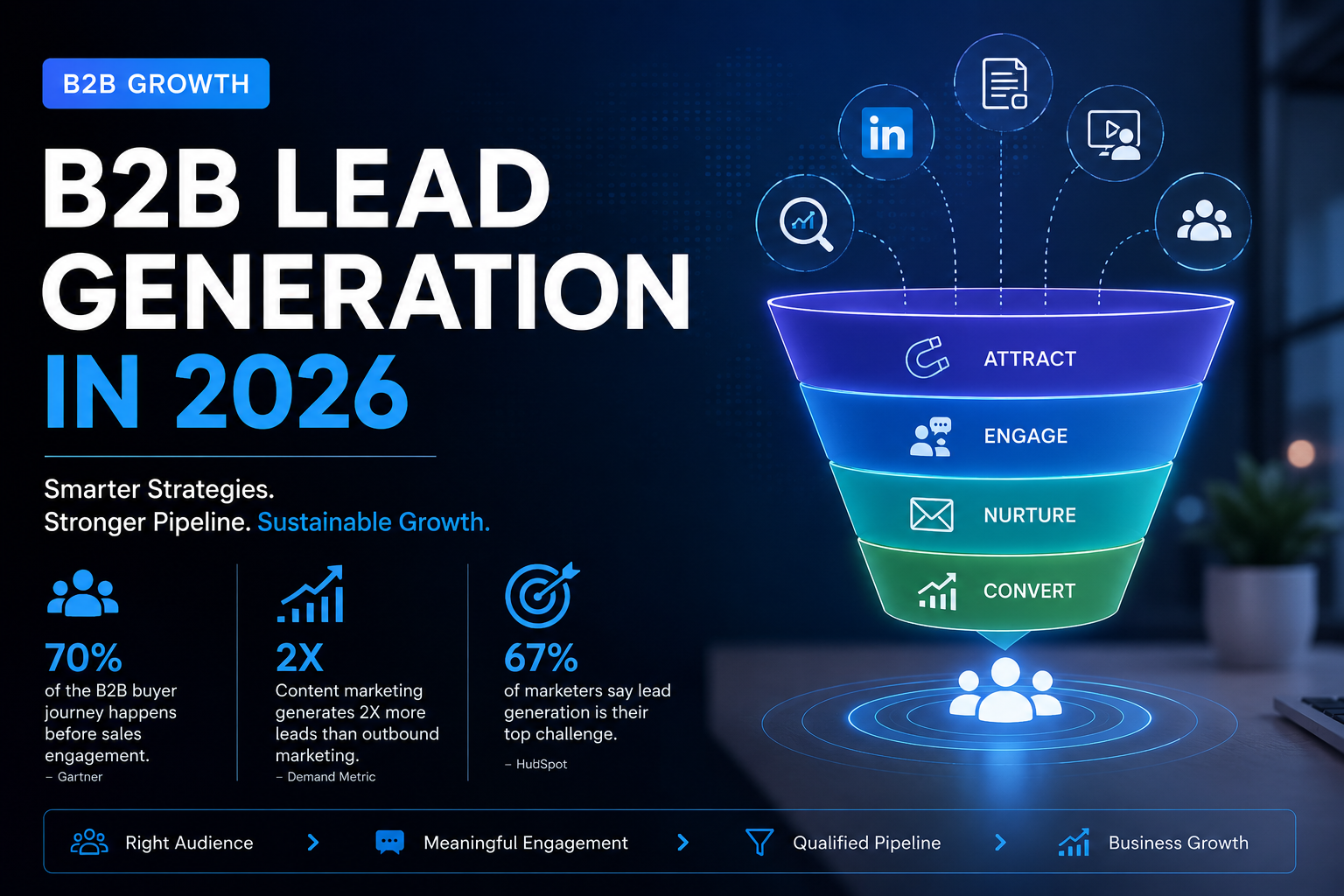
In fact, according to industry research, nearly 70% of the B2B buyer journey now happens before direct sales interaction. That single statistic highlights how modern lead generation is no longer just a sales activity — it’s a complete digital engagement strategy.
Innovative B2B Lead Generation tactics are crucial for businesses striving for growth.
In today’s competitive landscape, businesses must adopt innovative approaches to B2B Lead Generation to stay ahead.
The brands growing fastest today understand one thing clearly: visibility without relevance no longer works.
This focus on B2B Lead Generation ensures that brands meet the evolving expectations of their audience.
The Modern Buyer Is Smarter, Faster, and More Selective
Today’s B2B buyers expect personalized experiences and value-driven interactions. They want brands to educate, inform, and solve problems before asking for a meeting or demo.
This shift has pushed businesses toward more intelligent lead generation models powered by:
- content marketing,
- AI-driven insights,
- audience intent signals,
- automation,
- and multi-channel engagement.
A company that publishes useful insights consistently will almost always outperform a brand relying only on aggressive outreach.
That’s because trust has become the foundation of conversion.
Why Traditional Lead Generation Is Losing Effectiveness
There was a time when large contact databases and bulk campaigns could generate predictable pipelines. But the digital landscape is now overcrowded. Decision-makers are flooded with marketing messages every single day.
Generic campaigns often get ignored because buyers now prioritize relevance over volume.
This is where smarter B2B strategies make the difference.
Businesses are increasingly investing in:
- targeted content distribution,
- intent-based audience segmentation,
- personalized outreach,
- and demand generation campaigns designed around buyer behavior.
Effective B2B Lead Generation strategies rely heavily on understanding customer intent.
The success of any marketing efforts hinges on successful B2B Lead Generation.
Instead of asking, “How many leads did we generate?”, companies are now asking, “How many qualified conversations did we create?”
That mindset shift is transforming modern B2B marketing.
Content Has Become the Engine Behind B2B Growth
“People don’t buy when they understand your product. They buy when they trust your expertise.”
Content marketing continues to dominate because it aligns perfectly with modern buying behavior. Blogs, whitepapers, reports, webinars, and industry insights help businesses establish authority while educating potential buyers organically.
Statistics consistently show that companies producing high-quality content generate significantly more inbound leads than businesses relying solely on paid outreach.
More importantly, content compounds over time.
A strong article, insightful report, or valuable whitepaper can continue attracting leads months — sometimes years — after publication. This makes content one of the most scalable assets in B2B marketing.
Platforms like iTMunch are becoming increasingly relevant because they focus on delivering insights around AI, Martech, demand generation, and evolving B2B marketing trends. In a rapidly changing digital ecosystem, marketers need access to reliable information that helps them adapt faster than competitors.
AI Is Reshaping the Future of Lead Generation
Artificial intelligence is no longer an experimental advantage — it’s becoming a standard growth tool.
Modern businesses are using AI to analyze customer intent, personalize messaging, automate workflows, optimize campaigns, and predict buying behavior more accurately than ever before.
Research suggests that AI-driven lead generation strategies can significantly improve conversion efficiency by helping teams focus on high-intent prospects instead of manual prospecting.
This creates a major competitive advantage:
less time wasted, faster engagement, and smarter decision-making.
The future of B2B marketing belongs to businesses that combine human creativity with AI-powered efficiency.
Multi-Channel Presence Is No Longer Optional
The average B2B buyer interacts with multiple touchpoints before making a purchasing decision. A prospect may discover a brand through LinkedIn, read a blog later, download a report days afterward, and finally respond to an email weeks later.
That means successful lead generation is no longer about a single campaign.
It’s about creating a connected ecosystem where content, outreach, automation, and engagement work together seamlessly.
Businesses investing in integrated strategies consistently outperform brands operating in isolated marketing silos.
Final Thoughts
B2B lead generation is evolving faster than ever, and businesses that continue relying on outdated tactics risk losing visibility in an increasingly competitive market.
The companies leading in 2026 are not necessarily the loudest brands — they are the most relevant, data-driven, and value-focused.
As AI, automation, and content-driven engagement continue shaping buyer behavior, platforms like iTMunch are helping marketers stay informed, adapt faster, and build smarter growth strategies for the future.
In this environment, B2B Lead Generation must adapt to leverage new technologies and insights.
Investing in effective B2B Lead Generation can help mitigate risks in an uncertain market.
With a solid strategy, B2B Lead Generation can transform potential into performance.
Ultimately, the future of B2B Lead Generation lies in the hands of those who innovate.