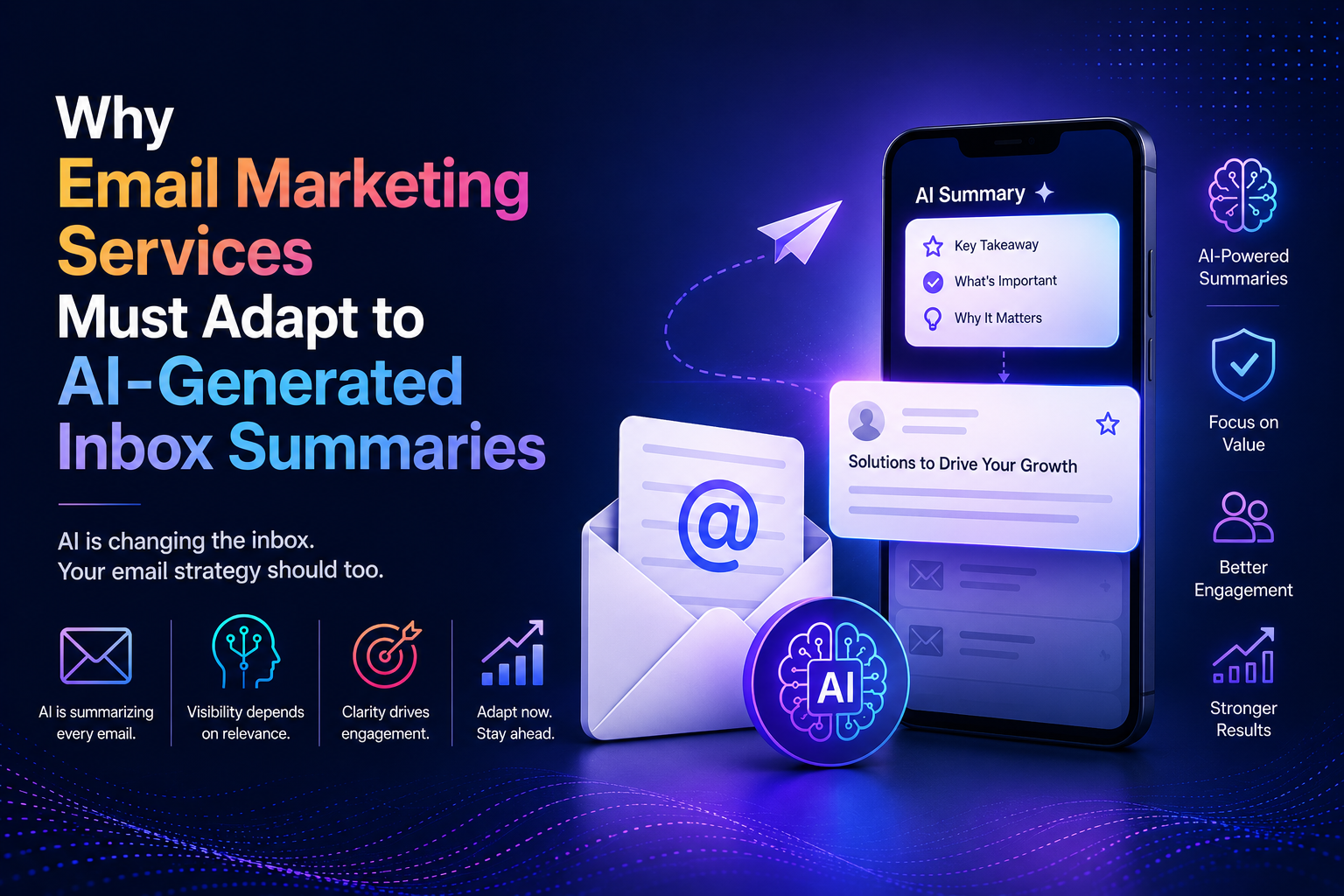
Why Email Marketing Services Must Adapt to AI-Generated Inbox Summaries
 Purva Wankhade,
2 months ago
5 min read
Purva Wankhade,
2 months ago
5 min read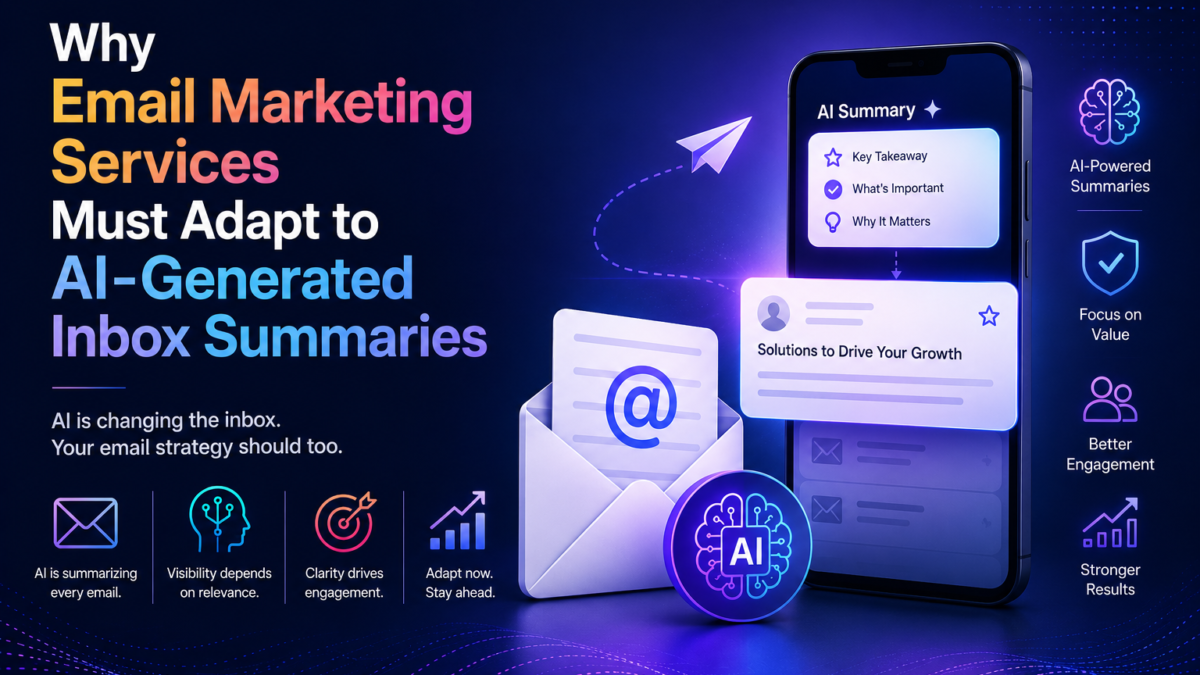
Email has survived every major shift in digital marketing. It outlasted social media trends, changing search algorithms, and the rise of countless communication platforms because it remains one of the most effective ways for businesses to build relationships with customers. Yet in 2026, Email Marketing is entering a transformation unlike any before. The challenge is no longer simply reaching the inbox. It is earning attention before the email is even opened.
Artificial intelligence is fundamentally changing how people interact with email. Major technology companies are integrating AI-powered inbox experiences that summarize messages, prioritize important conversations, and help users process crowded inboxes more efficiently. Instead of reading every subject line or preview text, recipients increasingly rely on AI-generated summaries to decide which emails deserve their attention.
For B2B decision makers, this shift demands a new approach to Email Marketing. Success will no longer depend solely on open rates or click-through rates. It will depend on whether AI systems can accurately understand, summarize, and communicate the value of an email before a human even opens it.
AI Is Becoming the First Reader of Every Marketing Email
For decades, marketers optimized emails for human behavior. Subject lines became shorter, preview text became more persuasive, and personalization strategies focused on increasing curiosity. While those practices remain important, AI is introducing a new audience that marketers must consider.
Modern email platforms increasingly use artificial intelligence to organize inboxes, identify priorities, summarize long messages, and surface the most relevant communications. Instead of simply filtering spam, AI now interprets context, evaluates content quality, and highlights key information for recipients.
This changes how Email Marketing content should be written. Emails that rely on vague headlines, excessive promotional language, or delayed messaging may lose effectiveness because AI-generated summaries often extract the central idea within seconds. If the primary value proposition is buried beneath lengthy introductions or generic marketing language, the summary may fail to communicate why the email matters.
At the same time, enterprise buyers are becoming more selective about the content they engage with. Executives receive hundreds of emails every week, making AI-assisted inbox management increasingly valuable. The businesses that communicate value immediately are more likely to remain visible in these intelligent inbox environments.
This evolution also reflects broader trends across generative AI. Rather than simply delivering information, AI systems are becoming decision-support tools that help professionals determine where to invest their attention.
Clarity Is Becoming More Valuable Than Creativity Alone
Creative copywriting will always have a place in marketing, but AI-generated summaries reward clarity above complexity. This represents an important shift for Email Marketing strategies targeting enterprise audiences.
Instead of relying on mystery or clever phrasing to encourage opens, organizations should prioritize clear messaging that communicates business value quickly. This is especially important for content syndication campaigns, where email often serves as the first touchpoint with potential buyers. The opening sentences increasingly determine how accurately AI systems summarize the content and whether recipients perceive it as relevant.
This does not mean marketing emails should become robotic. Storytelling, personalization, and compelling narratives remain powerful tools. However, those elements now work best when supported by a structure that clearly communicates intent from the beginning.
Recent developments across enterprise AI also highlight growing investments in intelligent workplace assistants capable of summarizing meetings, documents, reports, and emails. As these capabilities become standard across productivity platforms, marketing teams must recognize that their messages may be interpreted by AI before reaching the intended audience.
Organizations that embrace this reality are beginning to rethink email design, content hierarchy, and messaging frameworks. They are writing emails that are easier for both humans and AI systems to understand, creating experiences that remain effective regardless of how recipients consume information.
The Future of Email Marketing Is AI-Ready Communication
The evolution of AI-powered inboxes signals a broader transformation in digital communication. Businesses are no longer writing exclusively for people. They are increasingly communicating within ecosystems where intelligent systems organize, prioritize, summarize, and recommend content.
This changes how success should be measured. Traditional metrics like open rates remain valuable, but they provide only part of the picture. Marketing leaders must also consider message clarity, semantic relevance, contextual value, and how effectively AI systems interpret their communications.
The strongest Email Marketing campaigns will increasingly resemble high-quality business conversations rather than promotional broadcasts. Every email should present a clear purpose, deliver immediate value, and respect the recipient’s limited attention. These principles benefit both AI-generated summaries and human readers.
Looking ahead, advances in generative AI will continue reshaping enterprise communication. Inbox assistants may soon recommend responses, prioritize purchasing conversations, highlight business opportunities, and personalize summaries based on individual roles or interests. As these capabilities mature, organizations that create structured, informative, and trustworthy content will gain a significant competitive advantage.
The future of Email Marketing is not about competing with artificial intelligence. It is about designing communication that works alongside it. Businesses that understand how AI interprets content will be better positioned to build stronger customer relationships, improve engagement, and remain visible in increasingly intelligent inbox experiences.
For B2B decision makers, the message is clear. The inbox is evolving from a collection of emails into an AI-assisted workspace where relevance matters more than volume. Organizations that adapt their Email Marketing strategies today will be better prepared for a future in which every email is evaluated by both an algorithm and the person it is ultimately meant to serve.